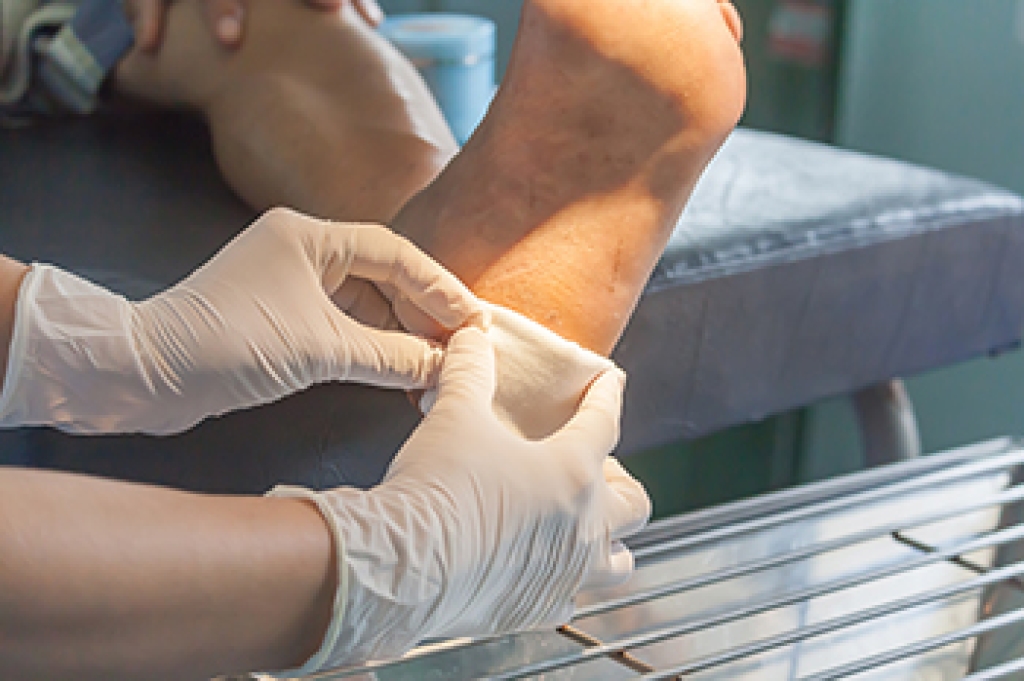
Foot wounds require attention because a small wound can become a health concern. Pressure injuries on the feet develop when pressure limits the flow of oxygen and nutrients to the skin and deeper tissues. They are more likely in patients who spend long periods in a bed or chair, have limited movement, or are weakened by illness. Bony areas of the foot are vulnerable because tissue can become trapped between bone and a firm surface. Diabetes, poor circulation, and reduced feeling can raise the risk and make a wound harder to notice.
Several forces can contribute to skin damage. Shearing happens when the skin stays in place while deeper tissue shifts, as when a patient slides down in a bed or chair. This movement squeezes blood vessels and becomes more damaging when combined with pressure. Friction from rubbing can weaken the skin, although friction alone does not cause a pressure injury. Excess moisture can also make skin fragile and more likely to break down. Poor nutrition slows the repair of damaged cells. Weight loss can reduce the natural padding that protects the bones of the feet.
A podiatrist can examine the wound, measure its depth, and check skin for infection. The evaluation also includes testing circulation and sensation in the feet. Treatment can include cleaning the wound, removing damaged tissue, and applying a protective dressing. A podiatrist can reduce pressure on the affected area with padding, special shoes, or a custom device. Follow-up visits allow the podiatrist to track healing and adjust the treatment plan. Patients should seek prompt care for spreading redness, increasing swelling, or drainage. Fever, darkened tissue, or a bad odor can signal a serious problem. Early podiatric care can lower the risk of infection, deeper tissue damage, and limb loss. If you have symptoms of pressure injuries on the feet, it is suggested that you schedule an appointment with a podiatrist for a diagnosis and appropriate treatment.
Wound care is an important part in dealing with diabetes. If you have diabetes and a foot wound or would like more information about wound care for diabetics, consult with Mack Jay Groves IV, DPM from Groves Foot & Ankle. Our doctor will assess your condition and provide you with quality foot and ankle treatment.
What Is Wound Care?
Wound care is the practice of taking proper care of a wound. This can range from the smallest to the largest of wounds. While everyone can benefit from proper wound care, it is much more important for diabetics. Diabetics often suffer from poor blood circulation which causes wounds to heal much slower than they would in a non-diabetic.
What Is the Importance of Wound Care?
While it may not seem apparent with small ulcers on the foot, for diabetics, any size ulcer can become infected. Diabetics often also suffer from neuropathy, or nerve loss. This means they might not even feel when they have an ulcer on their foot. If the wound becomes severely infected, amputation may be necessary. Therefore, it is of the upmost importance to properly care for any and all foot wounds.
How to Care for Wounds
The best way to care for foot wounds is to prevent them. For diabetics, this means daily inspections of the feet for any signs of abnormalities or ulcers. It is also recommended to see a podiatrist several times a year for a foot inspection. If you do have an ulcer, run the wound under water to clear dirt from the wound; then apply antibiotic ointment to the wound and cover with a bandage. Bandages should be changed daily and keeping pressure off the wound is smart. It is advised to see a podiatrist, who can keep an eye on it.
If you have any questions please contact our office located in Covington, LA . We offer the newest diagnostic and treatment technologies for all your foot and ankle needs.
